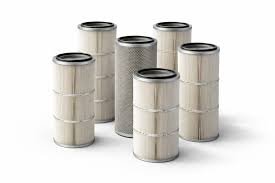
Lüftungsfilter are an essential part of modern ventilation systems, helping maintain clean indoor air while protecting equipment from dust, dirt, pollen, and other airborne particles. Whether installed in homes, offices, commercial buildings, or industrial facilities, the right filter can make a significant difference in air quality, system efficiency, and maintenance requirements. Choosing the appropriate filter class depends on the type of ventilation system, the environment, and the level of air cleanliness required.
In Germany, ventilation systems commonly use different filter classes, including G4, M5, F7, and F8. Each class is designed to capture particles of different sizes and offers a specific level of filtration performance. Understanding these differences makes it easier to select the right solution for a particular application.
Why Lüftungsfilter Are Important
Ventilation systems continuously move air between indoor and outdoor environments. During this process, airborne contaminants can enter the building or circulate through the ventilation equipment. Dust, pollen, fibers, and other particles may accumulate inside ducts, fans, heat exchangers, and other components if they are not properly filtered.
A high-quality lüftungsfilter helps prevent these contaminants from entering the indoor environment. It also protects sensitive ventilation components from excessive dirt buildup. This can contribute to improved system performance and potentially reduce the frequency of cleaning and maintenance.
In residential buildings, effective filtration can be particularly useful for people who are sensitive to pollen and airborne dust. In offices and commercial spaces, clean air can contribute to a more comfortable indoor environment. Industrial applications may require specialized filtration solutions depending on the processes and contaminants involved.
Understanding Filter Classes
Not all ventilation filters provide the same level of protection. Filter classes are used to categorize filtration performance and help users identify suitable products for specific ventilation applications.
The commonly encountered G4, M5, F7, and F8 classifications represent different levels of filtration. Generally, lower classes are used for basic protection against larger particles, while higher classes provide more effective filtration of smaller airborne particles.
It is important to understand that modern European filtration standards have evolved over time. The ISO 16890 standard is now widely used for classifying air filters, while older classifications such as G4, M5, F7, and F8 are still frequently referenced in the ventilation industry. When purchasing a filter, users should check both the required specification of their ventilation system and the manufacturer’s recommendations.
G4 Filters for Basic Air Filtration
G4 filters are commonly used as pre-filters in ventilation and air-conditioning systems. Their primary purpose is to capture larger particles such as dust, hair, fibers, and coarse dirt before these contaminants reach more sensitive components or finer filters.
Because of their relatively low pressure resistance, G4 filters can be suitable for many general ventilation applications. They are often used as the first stage of filtration in multi-stage systems.
A G4 lüftungsfilter may be found in residential ventilation systems, commercial buildings, workshops, and other environments where basic particle filtration is required. In systems with multiple filtration stages, the G4 filter can help extend the service life of finer filters by removing larger contaminants at an earlier stage.
M5 Filters for Improved Particle Protection
M5 filters provide a higher level of filtration than basic coarse filters and can be used in ventilation systems where improved protection against airborne particles is required. They are suitable for applications involving finer dust and other contaminants that may pass through a basic pre-filter.
M5 filtration can be found in various commercial and industrial ventilation applications. Depending on the system design, these filters may be used as a primary filter or as part of a multi-stage filtration setup.
When selecting an M5 lüftungsfilter, it is important to consider the airflow requirements of the ventilation system. A filter that is too restrictive for a particular fan or air-handling unit can increase pressure drop and affect overall system performance.
F7 Filters for Fine Filtration
F7 filters are widely used when higher filtration performance is needed. They are designed to capture a greater proportion of smaller airborne particles than coarse filters, making them a popular choice for modern ventilation systems in residential, office, and commercial environments.
An F7 lüftungsfilter can be particularly useful in areas where outdoor air contains significant amounts of fine dust or pollen. Many ventilation systems use fine filters to improve indoor air quality while maintaining a steady supply of fresh air.
F7 filters may also be used in combination with pre-filters. In such configurations, a coarse filter removes larger particles first, while the F7 filter provides finer filtration. This arrangement can help protect the fine filter and support efficient operation.
F8 Filters for Higher Filtration Requirements
F8 filters offer an even higher level of filtration compared with many commonly used ventilation filters. They are suitable for applications where improved removal of fine particles is important.
These filters may be used in buildings with demanding indoor air quality requirements or in ventilation systems designed to provide enhanced particle filtration. However, higher filtration performance can also result in greater airflow resistance, especially as the filter becomes loaded with dust.
For this reason, choosing an F8 lüftungsfilter should always involve checking the specifications of the ventilation system. The fan must be capable of maintaining the required airflow while operating against the filter’s pressure drop.
Choosing the Right Filter for Your Application
Selecting the correct filter class requires consideration of several factors. The first is the type of ventilation system. Residential heat recovery ventilation units, commercial air-handling systems, and industrial ventilation equipment may all require different filtration solutions.
The second factor is the environment. A building located in an urban area with high levels of outdoor pollution may have different filtration needs from a rural property. Similarly, offices, schools, healthcare facilities, manufacturing plants, and warehouses may each require specialized approaches.
Airflow volume is another important consideration. Every ventilation system is designed to operate within a specific airflow range. Installing a filter with excessive resistance can reduce airflow and increase the workload on the fan.
Filter dimensions also matter. Even a high-performance lüftungsfilter will not work correctly if it does not fit the ventilation unit properly. Before ordering a replacement, users should check the filter’s length, width, depth, and installation orientation.
The Importance of Regular Filter Replacement
Even the best filter eventually becomes loaded with captured particles. As dirt accumulates, airflow resistance can increase, potentially reducing ventilation performance and increasing energy consumption.
Regular inspection and replacement are therefore essential. The replacement interval depends on factors such as air quality, operating hours, filter type, and building location. Some systems may require more frequent maintenance in areas with high levels of dust or pollution.
Using certified, high-quality filters can also help ensure consistent filtration performance. Buyers should choose products that meet the technical requirements of their ventilation equipment and follow the manufacturer’s recommended maintenance schedule.
Buying Lüftungsfilter Online
Today, customers can conveniently purchase ventilation filters through specialized online shops. A reliable German online store may offer a wide selection of high-quality G4, M5, F7, and F8 filters for ventilation systems at competitive prices directly from the manufacturer.
When shopping online, customers should pay attention to product specifications, filter dimensions, filtration class, compatibility, and certification. A well-organized online shop can make it easier to compare different products and find the appropriate replacement filter for a particular ventilation unit.
Choosing high-quality, certified filters directly from a manufacturer can also provide confidence in consistent product performance. However, the lowest purchase price should not always be the only consideration. Filter quality, service life, pressure drop, and compatibility can all influence the overall operating cost of a ventilation system.
Conclusion
Understanding different filter classes is essential for maintaining an effective ventilation system. G4 filters are commonly used for basic particle filtration and pre-filtration, while M5 filters offer improved protection against finer particles. F7 filters provide enhanced fine-particle filtration for many residential and commercial applications, and F8 filters are suitable for systems requiring a higher level of filtration performance.
The right lüftungsfilter depends on the ventilation system, airflow requirements, environmental conditions, and desired air quality. By selecting the correct filter class, maintaining proper dimensions, and replacing filters regularly, building owners and facility managers can support efficient ventilation and cleaner indoor air. High-quality filters from reputable manufacturers can provide a practical solution for a wide range of ventilation applications in Germany and beyond.
About the Author